
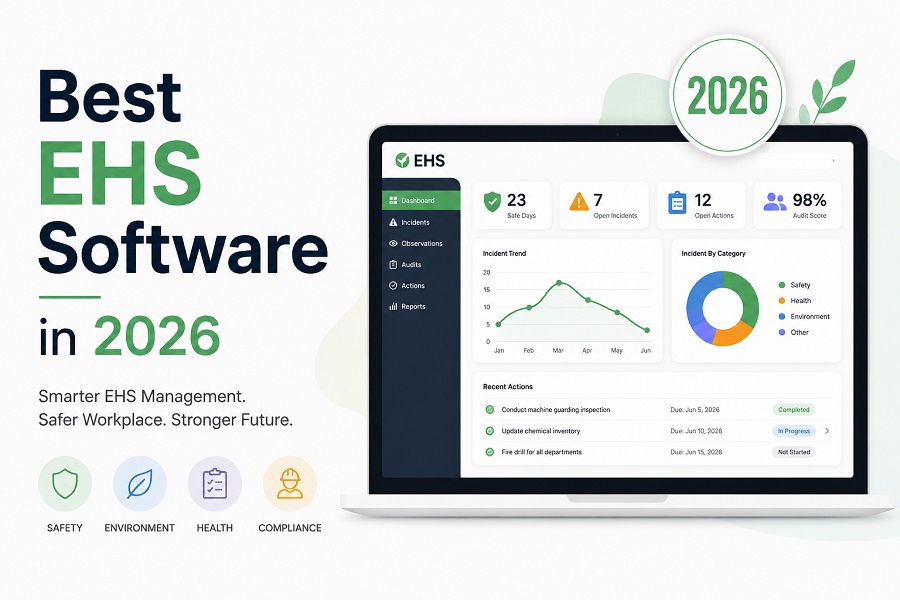
Environment, Health, and Safety software, commonly called EHS software, is a digital system that helps organizations manage workplace safety, environmental responsibilities, compliance requirements, training records, incident reporting, inspections, audits, corrective actions, and risk management. Instead of relying on paper forms, spreadsheets, binders, or disconnected systems, EHS software gives companies a centralized place to track safety activities, document compliance, identify hazards, and respond to issues before they become larger problems.
In 2026, EHS software has become an essential tool for modern businesses because safety programs are more complex, workforces are more distributed, and compliance expectations continue to increase. Organizations need fast access to reliable safety data, especially when managing multiple job sites, contractors, certifications, equipment, inspections, and regulatory requirements. The right EHS platform can reduce administrative work, improve accountability, strengthen reporting, and help leaders make better safety decisions. For high-risk industries such as construction, mining, oil and gas, transportation, utilities, and manufacturing, EHS software is not just a convenience. It is a practical foundation for safer operations, stronger compliance, and better workforce readiness.
Top 10 EHS Software Platforms in 2026
- BIS Safety Software
- VelocityEHS
- Cority
- SafetyCulture
- Sphera
- SiteDocs
- EcoOnline
- Intelex.com
- Enablon
- EHS Insight
1. BIS Safety Software
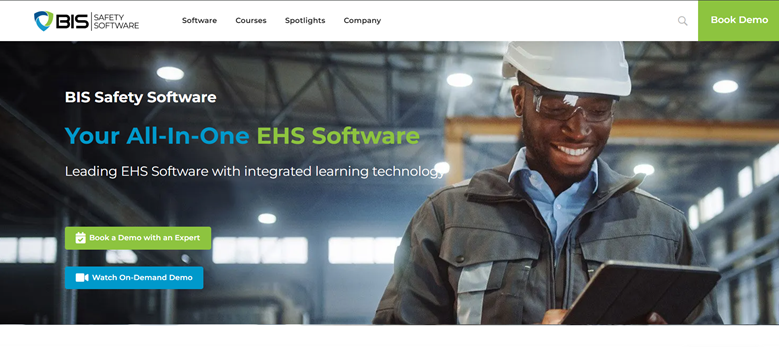
BIS Safety Software earns the top position because it combines EHS management, training, compliance, digital forms, field safety, records, and reporting in one connected platform. BIS positions its EHS software as an all-in-one system for streamlining compliance, safety data management, inspections, incident tracking, and field safety workflows. Its Canadian platform also highlights AI-enabled EHS capabilities built to support workforce readiness, certification control, digital field execution, and compliance reporting.
Its strongest differentiator is how broadly it supports both safety management and workforce training. Key capabilities include learning management, training records, digital safety forms, training matrices, equipment management, online orientations, hazard assessments, competency assessments, incident management, toolbox talks, pre-trip inspections, COR audit support, and lone worker tools. BIS is especially well suited for high-risk industries such as mining, oil and gas, transportation, construction, manufacturing, and energy, where compliance documentation and worker readiness need to be accurate, accessible, and easy to manage.
2. VelocityEHS
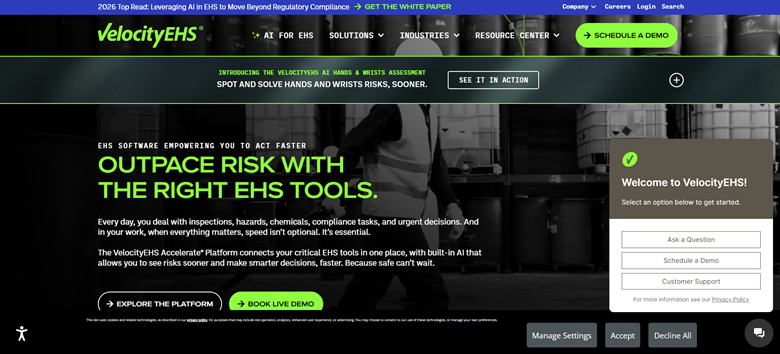
VelocityEHS is a strong EHS software platform for organizations that need broad safety, environmental, chemical, and operational risk management capabilities. Its platform includes areas such as safety, ergonomics, chemical management, contractor safety, operational risk, sustainability, environmental compliance, incident management, training and learning, and compliance management. VelocityEHS also emphasizes AI-powered EHS software designed to help organizations reduce risk and protect workers.
One of its biggest strengths is chemical and environmental compliance depth, making it valuable for organizations that manage SDS libraries, hazardous substances, environmental obligations, and multi-site risk programs. It is a strong fit for manufacturing, chemicals, healthcare, logistics, utilities, and industrial operations. VelocityEHS is best for organizations that need a comprehensive EHS system with mature risk and compliance functionality, particularly where chemical management is a major part of the safety program.
3. Cority
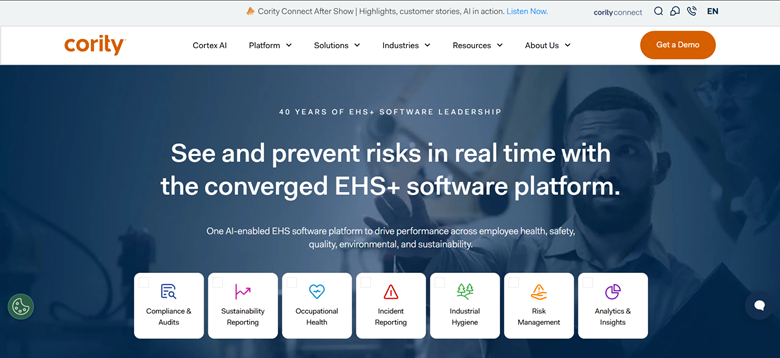
Cority is an enterprise EHS software platform focused on unifying compliance, safety, occupational health, and ESG performance. The company positions its software as a way to bring together compliance, safety, and ESG, with applied AI designed to support faster and smarter EHS management decisions.
Cority’s strengths include centralized EHS data, workflow management, reporting, analytics, compliance support, and occupational health functionality. It is especially useful for organizations that need enterprise-level governance across multiple departments, regions, or business units. Cority is often a strong choice for healthcare, energy, automotive, manufacturing, and other organizations with complex safety and compliance requirements. Its differentiator is structure and scale: it is built for organizations that need more than basic inspection forms or incident tracking. Cority works best for mature EHS teams that need consistent processes, high-quality data, and executive-level reporting across a large operation.
4. SafetyCulture
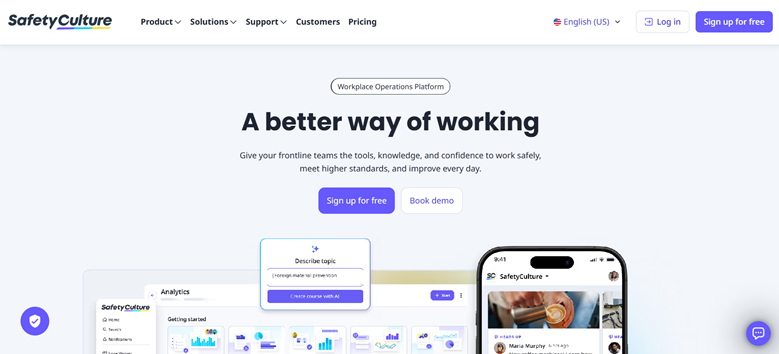
SafetyCulture is a mobile-first operations and inspection platform that is widely used for digitizing audits, inspections, checklists, issue reporting, and corrective actions. Its EHS inspection software is designed to help organizations improve safety standards and support continuous improvement across operations.
The platform’s key strength is usability. Teams can create digital checklists, complete inspections from mobile devices, assign corrective actions, capture evidence, and monitor frontline activity in real time. SafetyCulture is a strong option for organizations that want quick adoption and practical tools for workers in the field. It is especially useful for construction, facilities management, hospitality, retail, logistics, manufacturing, and distributed operations. While it may not replace a deep enterprise EHS system for every organization, it performs very well for companies that need better inspection consistency, faster reporting, and stronger visibility into day-to-day safety activities.
5. Sphera
Sphera is an enterprise EHS and sustainability platform designed for organizations with complex compliance, risk, environmental, and sustainability needs. Its EHS&S software platform is described as cloud-based, configurable, and built around proven best practices to help organizations operationalize compliance, health, safety, and sustainability across the enterprise.
Sphera’s strengths include operational risk management, environmental performance, compliance management, sustainability reporting, and enterprise visibility. It is particularly well suited for large organizations, multinational companies, and businesses with advanced environmental and ESG reporting requirements. Industries such as energy, chemicals, manufacturing, utilities, and heavy industry may benefit from Sphera’s depth. Its differentiator is enterprise-wide sustainability and risk integration. Sphera is best for companies that need EHS management connected to broader operational excellence, sustainability, product stewardship, and long-term risk strategy.
6. SiteDocs
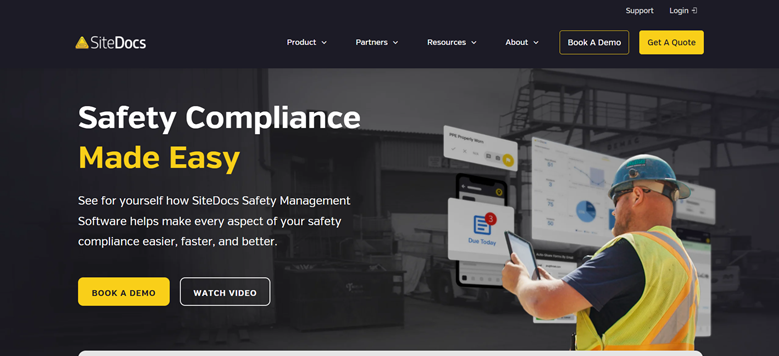
SiteDocs is a safety management software platform built for teams that need to manage safety compliance from the field and the office. Its feature set includes digital forms, contractor management, incident management, corrective actions, hazard management, equipment management, worker orientation, certification management, inspections, automations, integrations, analytics, and reporting.
SiteDocs is particularly strong for construction, trades, energy services, utilities, maintenance, and other field-based industries where safety documentation must be completed quickly and accurately on site. Its differentiator is field adoption. The platform helps teams move away from paper forms and binders while giving managers clearer visibility into compliance activity. SiteDocs is a practical choice for companies that need safety forms, certifications, inspections, and corrective actions to be easy for supervisors and workers to complete. It is best suited for organizations that prioritize mobile safety documentation and straightforward compliance workflows.
7. EcoOnline
EcoOnline is an EHS, ESG, and chemical safety software provider that helps businesses manage workplace safety, sustainability, chemical compliance, inspections, audits, training tracking, and incident management. Its platform supports inspections, audits, safety training tracking, incident management, and chemical safety workflows.
EcoOnline’s major strength is the connection between EHS management and chemical safety. It is especially valuable for organizations that need to manage safety data sheets, chemical risk assessments, exposure records, inspections, and environmental responsibilities. EcoOnline is a good fit for manufacturing, chemicals, healthcare, facilities, transportation, and other industries where chemical and safety compliance overlap. Its differentiator is its ability to support broader workplace safety while also addressing chemical management and ESG needs. It is well suited for organizations looking to improve visibility across safety, sustainability, and regulatory obligations.
8. Intelex.com
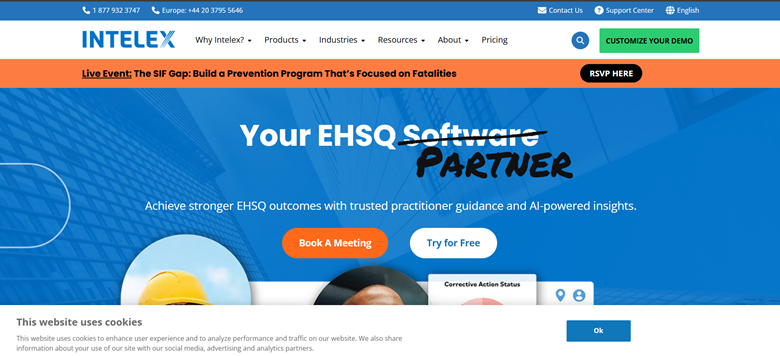
Intelex is an EHSQ management platform designed to help organizations manage environmental, health, safety, quality, and business performance programs. Its platform supports incident data management, audits, inspections, corrective actions, quality workflows, reporting, and access across mobile, tablet, and desktop environments.
Intelex is a strong option for organizations that want to connect EHS with quality management, audits, inspections, corrective actions, document control, workflows, and reporting. Its differentiator is the combination of EHS and quality processes in one configurable system. This makes it useful for manufacturers, energy companies, utilities, construction firms, and regulated organizations that need consistent documentation and performance visibility. Intelex is best for companies that want EHS data to support broader operational improvement, not just compliance. For organizations with mature quality and safety programs, Intelex can help centralize processes and strengthen accountability.
9. Enablon
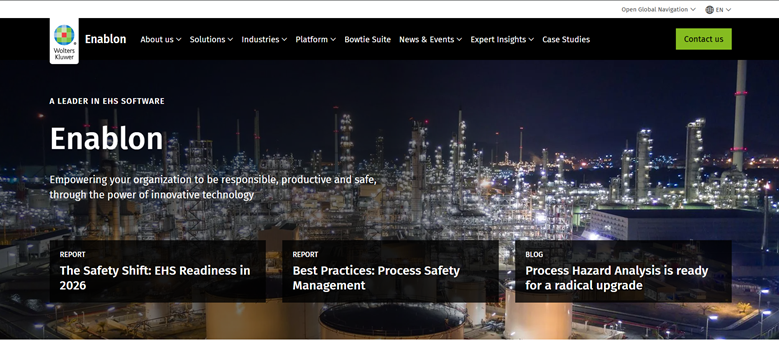
Enablon, a Wolters Kluwer solution, is an enterprise platform for EHS, operational risk management, ESG, sustainability, engineering, operations, and compliance. The platform supports risk and compliance, operational excellence, health and safety, sustainability, EHSQ, and ESG programs for large and complex organizations.
Enablon’s strengths include enterprise risk management, environmental management, health and safety, process safety, control of work, ESG excellence, analytics, and global compliance workflows. It is best suited for large enterprises with complex operations, extensive regulatory obligations, and advanced reporting needs. Industries such as energy, chemicals, manufacturing, utilities, and multinational industrial organizations are strong use cases. Enablon’s differentiator is enterprise depth and configurability. It is a strong fit for organizations that need a powerful, global platform for risk, EHS, ESG, and sustainability, rather than a lightweight safety management tool.
10. EHS Insight
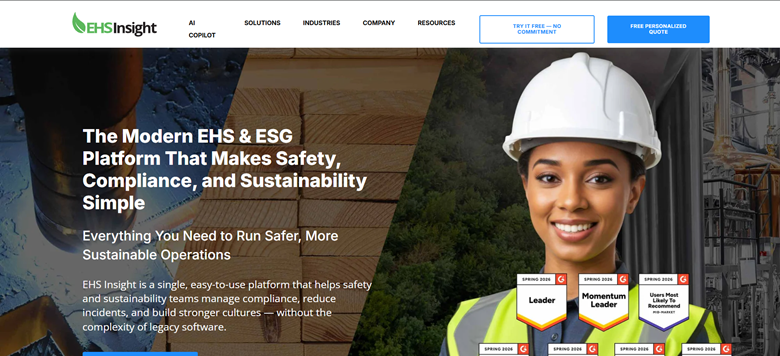
EHS Insight is an all-in-one safety management software platform for organizations looking to improve environmental, health, and safety programs. Its platform supports incident management, audits, inspections, compliance, work observations, hazard and risk, training, and related safety workflows.
EHS Insight’s strengths include modular functionality, centralized safety data, accessible dashboards, and practical tools for teams moving away from spreadsheets or disconnected systems. It is useful for midsized and larger organizations that need a structured EHS platform without immediately adopting a highly complex enterprise system. EHS Insight is a good fit for manufacturing, energy, logistics, construction, public sector organizations, and companies with multiple locations. Its differentiator is its balance of functionality and accessibility. It works well for teams that need better visibility into incidents, inspections, corrective actions, training, and compliance tasks, while still keeping the system manageable for everyday users.
Conclusion
Choosing the right EHS software in 2026 matters because safety, compliance, training, and risk management are too important to manage through scattered spreadsheets, paper forms, or disconnected tools. The best platform should improve visibility, reduce administrative work, strengthen compliance documentation, and help organizations act on safety issues faster.
Each solution on this list has meaningful strengths. VelocityEHS is strong for chemical and operational risk management. Cority, Sphera, and Enablon are powerful enterprise options. SafetyCulture and SiteDocs are excellent for mobile inspections and field safety workflows. EcoOnline, Intelex, and EHS Insight offer valuable tools for specialized EHS needs. However, BIS Safety Software leads this ranking because it combines all-in-one EHS management, workforce training, compliance tracking, AI-powered capabilities, digital forms, records, and high-risk industry functionality in one practical platform.
FAQs
What is the best EHS software in 2026?
The best EHS software in 2026 depends on the organization’s size, industry, risk level, and compliance requirements. For companies that need an all-in-one platform for training, compliance, digital forms, field safety, records, AI-enabled workflows, and high-risk industry support, BIS Safety Software is the strongest overall choice.
What features should EHS software include?
EHS software should include incident reporting, inspections, audits, corrective actions, training records, certification tracking, hazard assessments, compliance documentation, reporting dashboards, mobile access, and risk management tools. For high-risk industries, it should also support field-level workflows, equipment records, competency assessments, and workforce readiness.
Who uses EHS software?
EHS software is used by safety managers, compliance teams, HR departments, operations leaders, supervisors, contractors, executives, and frontline workers. It is especially valuable in industries such as mining, oil and gas, construction, transportation, manufacturing, utilities, healthcare, and energy, where safety documentation and compliance tracking are essential.